

When people search for gambling-related topics such as “slot gacor,” they often encounter a mix of genuine explanations, marketing content, and misleading claims.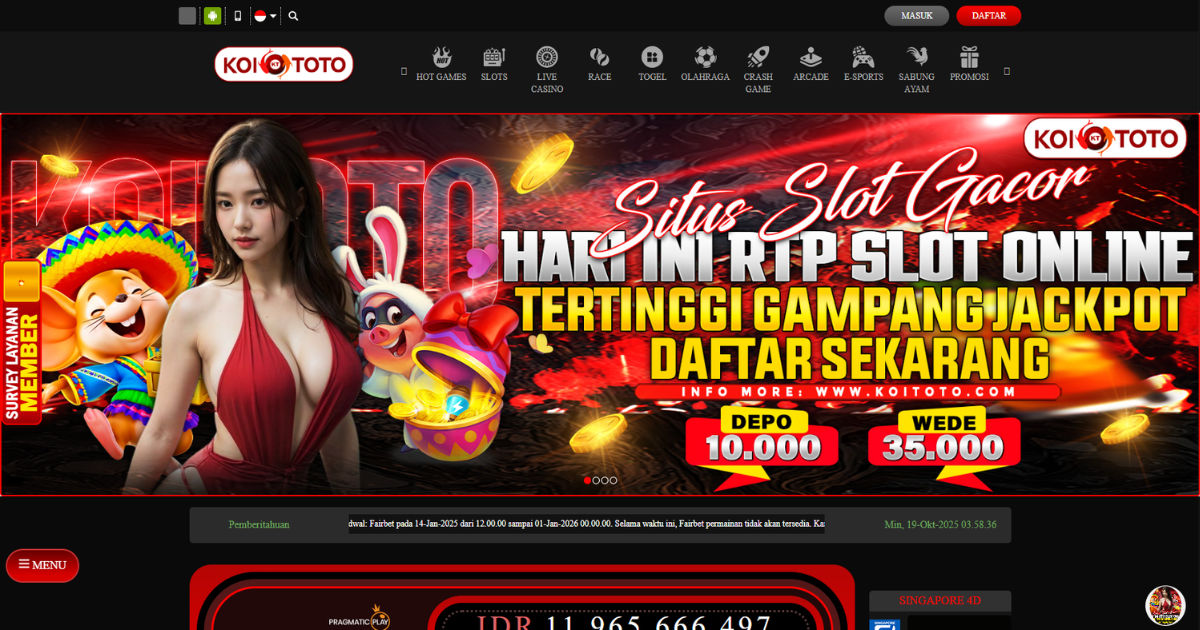
Knowing what makes a source credible is important for avoiding confusion or false expectations in rtp slot discussions. Credibility is not about how convincing a website looks—it’s about evidence, transparency, and consistency.
What “Credible Source” Really Means
A credible source is one that provides information you can reasonably trust because it follows certain standards:
Clear Authorship
Reliable content usually explains:
- Who wrote it
- What their expertise is
- Why they are qualified to explain the topic
Anonymous websites or pages with no author details are less trustworthy.
Transparent Purpose
Ask yourself:
- Is this content trying to inform me?
- Or is it trying to push me to sign up or deposit money?
Many gambling-related pages are promotional, even if they look educational.
Evidence-Based Explanations
Credible explanations are supported by:
- Clear definitions
- Logical reasoning
- References to known systems (like RNGs in games)
If claims are vague like “guaranteed wins” or “sure strategies,” that’s a red flag.
Understanding RTP and Why It’s Often Misused
A commonly mentioned concept in gambling discussions is RTP (Return to Player). In simple terms, RTP refers to the theoretical percentage of wagered money a game returns to players over a long period.
For example:
- A game with 96% RTP theoretically returns 96 units for every 100 wagered over millions of spins.
Important Reality Check
Many unreliable sources misuse RTP by implying:
- It predicts short-term wins
- It guarantees outcomes
- It can be used to find “hot” or “lucky” games
In reality:
- RTP is a long-term statistical measure
- Individual outcomes are random
- Short sessions can vary widely from the RTP value
This misunderstanding is one of the biggest sources of confusion in gambling content online.
Signs a “Slot Gacor” Source Is NOT Credible
Many websites or social media posts use catchy phrases to attract attention. Here are common warning signs:
1. Promises of Guaranteed Wins
Any claim like:
- “100% win strategy”
- “Guaranteed payout system”
- “Always winning slots”
is not credible. Gambling outcomes are designed to be random.
2. Overuse of Emotional Language
Unreliable sources often use:
- “secret trick”
- “insider hack”
- “must-try method”
This is usually marketing language, not factual explanation.
3. No Explanation of How Systems Work
A credible explanation of slot systems should mention:
- Random Number Generators (RNGs)
- Probability
- House edge
If these are missing, the source is likely oversimplifying or misleading.
4. Fake “Data” or Unsupported Claims
Some sites show:
- Fake win rates
- Unverified RTP charts
- “hot time” patterns without evidence
Without transparent data sources, these claims are not reliable.
5. Heavy Focus on Promotion
If a page constantly pushes:
- Sign-ups
- Bonuses
- Referral links
then its main goal is marketing, not education.
What Makes a Gambling Information Source More Reliable
Even in a high-risk topic like gambling, some sources are more trustworthy than others.
1. Uses Mathematical Explanation
Reliable sources explain:
- Probability clearly
- How randomness works
- Why outcomes cannot be predicted
They avoid superstition-based reasoning.
2. Acknowledges Uncertainty
Good information always admits:
- You cannot predict individual outcomes
- Short-term results vary
- No strategy guarantees profit
Honesty about uncertainty is a strong credibility signal.
3. Explains Systems Instead of Tricks
Instead of saying “how to win,” credible sources explain:
- Game mechanics
- RTP meaning in practice
- Role of randomness
Education-focused content is more trustworthy than “strategy hacks.”
4. Independent or Regulatory References
More reliable content may reference:
- Gaming regulators
- Auditing companies
- Fairness certifications
These help verify whether a game is tested or regulated.
Why Misleading “Gacor” Content Spreads Easily
Misleading gambling content spreads quickly because it appeals to human psychology.
Pattern Seeking Behavior
Humans naturally try to find patterns, even in random systems. This leads to:
- Believing in “lucky times”
- Thinking machines can be “hot” or “cold”
Emotional Motivation
Winning stories spread faster than losing ones, creating:
- False impression of easy success
- Overconfidence in strategies
Social Media Amplification
Short videos and posts often:
- Oversimplify systems
- Highlight rare wins
- Ignore losses
This creates a distorted view of reality.
How to Evaluate Any Gambling Claim
You can use a simple checklist:
Step 1: Check the Claim Type
Ask:
- Is it promising guaranteed profit?
- Is it realistic or absolute?
If it promises certainty, be skeptical.
Step 2: Look for Evidence
Ask:
- Is data provided?
- Is the source explained?
No evidence = low credibility.
Step 3: Check for Technical Accuracy
Real explanations usually include:
- RNG (Random Number Generator)
- Probability
- RTP as long-term average
Missing technical detail is a warning sign.
Step 4: Identify the Goal of the Content
Ask:
- Is it trying to educate?
- Or trying to make me click, sign up, or deposit?
Marketing-heavy content is less reliable.
The Truth About Predicting Slot Outcomes
One of the most important realities is:
- Slot outcomes are random
- Each spin is independent
- Past results do not affect future results
Even if people claim patterns exist, they are usually coincidental.
This is why serious gambling education focuses on probability, not prediction.
Responsible Perspective on Gambling Information
Understanding credibility is not just about avoiding misinformation—it also helps reduce unrealistic expectations.
A responsible approach means:
- Treating gambling as entertainment, not income
- Understanding randomness
- Avoiding belief in “sure-win systems”
When people understand these principles, they are less likely to be misled.
Conclusion
Credible information about gambling-related topics can be identified through transparency, evidence, and realistic explanations. Claims that rely on certainty, emotional persuasion, or “secret strategies” are usually unreliable.
Concepts like RTP are often misunderstood and misused in low-quality content, even though they are simply statistical measures of long-term behavior rather than prediction tools. The most trustworthy sources are those that explain systems like randomness and probability clearly, without exaggeration.
Ultimately, the key to evaluating any gambling-related information is critical thinking. If a claim sounds too perfect, lacks evidence, or promises guaranteed outcomes, it is almost always misleading. Understanding this helps readers make more informed decisions and avoid falling for unrealistic expectations.
 Qazi Qazi
 Sharik Sharik