
How to set up Burhani Engineering Packing Machine?
 AsimAli
Burhani Engineering is widely recognized for manufacturing industrial-grade packing machines used in food, pharmaceutical, chemical, and consumer goods industries. In this guide, we will explain step by step how to set up a packing machine from Burhani Engineering in a safe, efficient, and professional way.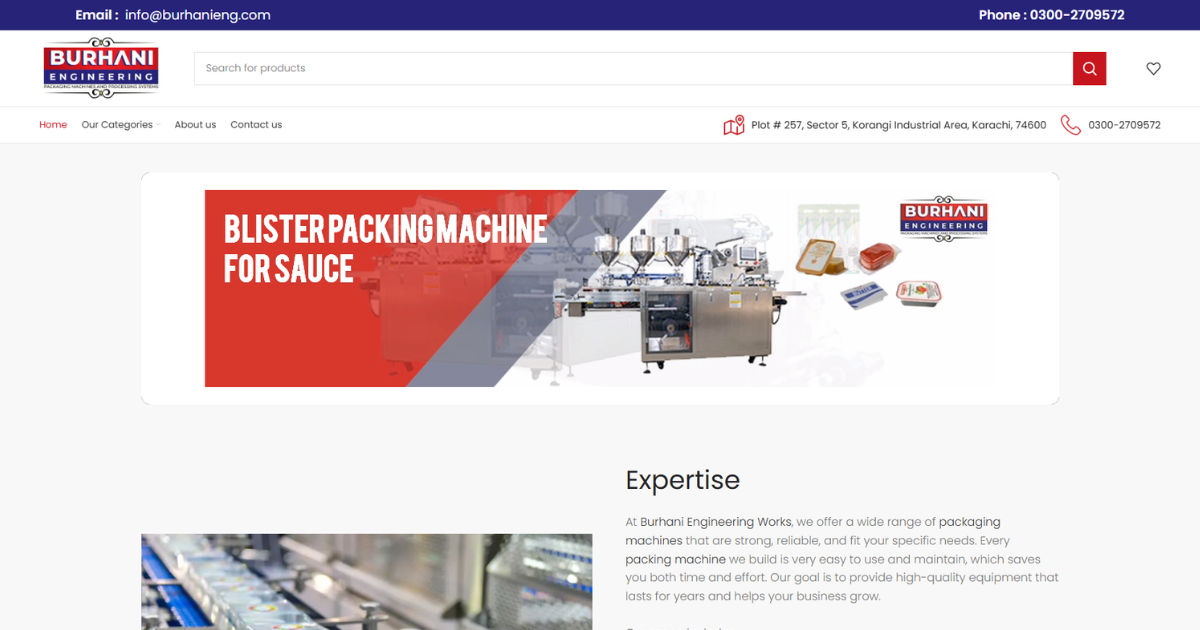
This article is written for beginners and 12th-grade students who want to understand industrial machine setup in simple language. Whether you are a technician, operator, or learner, this guide will help you understand the full process clearly.
We will cover installation, wiring, calibration, testing, safety, and maintenance in detail. Throughout this guide, the focus will remain on practical understanding of Burhani Engineering machines and how to get the best performance from them.
Packing Machines
Before setting up, it is important to understand what a packing machine does. A packing machine is used to fill, seal, and package products automatically or semi-automatically.
Machines from Burhani Engineering are designed to improve speed, accuracy, and hygiene in packaging operations.
Main Functions of Packing Machines
- Filling products into pouches, bottles, or containers
- Sealing packaging materials
- Measuring accurate quantities
- Labeling and coding (in advanced models)
Burhani Engineering machines are built for durability and continuous industrial use, making them suitable for factories and production lines.
Types of Packing Machines by Burhani Engineering
Different industries require different types of machines. Burhani Engineering produces several models depending on product type.
1. Automatic Packing Machines
These machines perform all tasks automatically, including filling and sealing.
2. Semi-Automatic Machines
These require some manual input but still increase productivity significantly.
3. Vertical Form Fill Seal Machines
Used for powders, grains, and small solid products.
4. Liquid Packing Machines
Designed for juices, oils, and chemical liquids.
Each Burhani Engineering machine comes with a specific setup procedure depending on its type.
Safety Precautions Before Setup
Safety is extremely important before starting installation. Industrial machines can be dangerous if handled incorrectly.
Basic Safety Rules
- Always disconnect power before installation
- Wear safety gloves and goggles
- Keep the workspace clean and dry
- Do not touch electrical parts without training
Every Burhani Engineering machine comes with a safety manual that should be read carefully before starting setup.
Unboxing and Inspection
The first step in setup is unboxing and checking all parts.
Steps for Inspection
- Open the packaging carefully
- Check for visible damage
- Match parts with the manual list
- Verify bolts, belts, and accessories
Burhani Engineering ensures that all machines are packed securely, but inspection is still necessary to avoid missing components.
Choosing the Installation Location
The location of installation affects machine performance.
Ideal Conditions
- Flat and stable surface
- Proper ventilation
- Low dust environment
- Near power supply
A well-planned setup area improves the efficiency of Burhani Engineering machines and reduces maintenance problems.
Mechanical Installation Process
Now we move to the actual installation process. This step involves assembling and positioning the machine.
Step 1: Positioning the Machine
Place the machine on a level surface. Use leveling tools if necessary.
Step 2: Fixing the Base
Tighten all base bolts to avoid vibration during operation.
Step 3: Installing Feeding System
Connect the feeding hopper or conveyor depending on the model.
Step 4: Aligning Moving Parts
Ensure belts and rollers are aligned properly.
Burhani Engineering machines are designed for easy mechanical setup, but proper alignment is still essential.
Electrical Connection Setup
Electrical installation is one of the most important steps.
Power Requirements
Check voltage requirements mentioned in the manual.
Wiring Steps
- Connect main power cable
- Attach grounding wire
- Install control panel connections
- Verify circuit breakers
Incorrect wiring can damage Burhani Engineering machines, so a certified electrician is recommended.
Control Panel Setup
The control panel is the brain of the machine.
Functions of Control Panel
- Start and stop machine
- Set packaging speed
- Adjust filling quantity
- Monitor temperature and pressure
Every Burhani Engineering model has a user-friendly control interface.
Setting Basic Parameters
- Speed adjustment
- Temperature control
- Filling weight calibration
Take time to understand each setting before starting production.
Calibration of the Machine
Calibration ensures accuracy in packaging.
Why Calibration is Important
Incorrect calibration leads to:
- Product wastage
- Weight errors
- Poor sealing quality
Calibration Steps
- Run test cycle
- Measure output weight
- Adjust settings on control panel
- Repeat until accuracy is achieved
Burhani Engineering machines are known for precise calibration systems that reduce manual errors.
Testing the Machine
After setup and calibration, testing is necessary.
Dry Testing
Run the machine without product to check movement and noise.
Load Testing
Use actual product in small quantity.
Observations During Testing
- Check sealing quality
- Monitor speed consistency
- Look for vibrations or errors
Testing ensures that the Burhani Engineering machine is ready for full production.
Common Setup Mistakes to Avoid
Many beginners make mistakes during setup.
Mistake 1: Ignoring Manual Instructions
Always follow the official guide from Burhani Engineering.
Mistake 2: Improper Leveling
Uneven surface causes vibration and damage.
Mistake 3: Wrong Electrical Input
Incorrect voltage can burn components.
Mistake 4: Skipping Calibration
Without calibration, packaging accuracy suffers.
Avoiding these mistakes improves machine life and efficiency.
Troubleshooting Setup Issues
Sometimes problems occur during installation.
Machine Not Starting
- Check power supply
- Verify wiring connections
- Inspect fuse or breaker
Uneven Filling
- Recalibrate system
- Check feeder alignment
Sealing Problems
- Adjust temperature settings
- Clean sealing jaws
Burhani Engineering machines include troubleshooting guides that help resolve most issues quickly.
Maintenance After Setup
Proper maintenance ensures long-term performance.
Daily Maintenance
- Clean machine after use
- Remove leftover materials
- Check moving parts
Weekly Maintenance
- Lubricate mechanical parts
- Inspect belts and sensors
Monthly Maintenance
- Check electrical wiring
- Test control panel functions
Regular maintenance keeps Burhani Engineering machines running smoothly.
Operator Training Guidelines
A machine is only as good as its operator.
Basic Training Points
- Understanding control panel
- Safety procedures
- Emergency shutdown process
- Cleaning and maintenance
Operators trained on Burhani Engineering machines perform more efficiently and safely.
Advantages of Burhani Engineering Packing Machines
High Efficiency
Machines increase production speed significantly.
Accuracy
Precise filling reduces material waste.
Durability
Built for long-term industrial use.
Easy Operation
User-friendly controls simplify usage.
These advantages make Burhani Engineering a popular choice in industrial sectors.
Industrial Applications
Packing machines are used in many industries.
Food Industry
- Chips
- Spices
- Snacks
Pharmaceutical Industry
- Tablets
- Powders
Chemical Industry
- Powders
- Liquids
Burhani Engineering machines are versatile and suitable for all these sectors.
Advanced Setup Tips
For better performance, follow these advanced tips.
Optimize Speed Settings
Do not run the machine at maximum speed initially.
Monitor Temperature
Proper sealing requires stable temperature.
Use Quality Packaging Material
Good material improves sealing quality.
Following these tips ensures better output from Burhani Engineering machines.
Environmental Considerations
Modern machines are designed with efficiency in mind.
Energy Efficiency
Burhani Engineering machines consume optimized power.
Waste Reduction
Accurate filling reduces product waste.
Clean Operation
Machines are designed for hygienic environments.
Long-Term Performance Optimization
To ensure long life of the machine:
- Perform regular servicing
- Replace worn parts on time
- Keep software updated (if applicable)
Proper care improves performance of Burhani Engineering equipment significantly.
Final Checklist Before Full Production
Before starting full-scale operation, ensure:
- Machine is properly installed
- Calibration is accurate
- Electrical setup is safe
- Testing is completed
- Operators are trained
This checklist ensures smooth operation of Burhani Engineering machines.
Conclusion
Setting up a packing machine requires careful planning, technical knowledge, and attention to detail. In this guide, we explored every step from unboxing to full production setup of machines made by Burhani Engineering.
We learned about installation, wiring, calibration, testing, maintenance, and safety procedures in a simple and structured way. Each step plays an important role in ensuring that Burhani Engineering machines perform efficiently and safely in industrial environments.
With proper setup and regular maintenance, these machines can last for many years while delivering high-speed and accurate packaging results. Operators who follow the correct procedures can maximize productivity and reduce downtime.
In short, understanding and correctly setting up Burhani Engineering packing machines is essential for smooth industrial operations, better output quality, and long-term reliability.